According to USA Today, Harry Potter and the Half-Blood Prince will be available in paperback July 26th in a duel release in the United Kingdom and the United States.She means dual. But a duel, preferably with wands, would have been really cool.
An online journal in which members of The Society for the Promotion of Good Grammar document their noble efforts.
Wednesday, May 31, 2006
Something We'd Like to See
An evil word twin strikes one of our favorite blogs, and yet makes us sigh wistfully:
Latin Lovers? Hardly
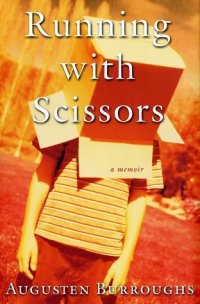
Let's just say we have a bit of a chip on our shoulder when it comes to Latin. We never studied it (we went straight to the vastly superior Greek). Perhaps that's why we avoid Latin in our language whenever possible.Nonetheless, our undergarments do get in a twist when we encounter incorrect Latin. The following comes from the transcript of a Jane Magazine chat with "Running with Scissors" author Augusten Burroughs. (Great book, by the way.)
I don't have a formal writing schedule, per say. But I'm usually at my desk in my office by 8:30 each morning. And the first thing I do is email with my Posse. Sometimes, something I'll write in an email will strike me as subject matter for an essay, so I'll save that email in a special folder. But this email back-and-forth with my friends might go on for an hour or two, then the workday stuff starts coming in. This might be interview requests from abroad, a Q&A for a booksellers website, something having to do with the RWS movie. The day is filled with tasks that have little to do with actual writing.
We'd rather run with scissors than spell per se incorrectly. Likewise, these oft-bungled Latinisms:
- Penultimate: This is not a fancy way of saying last. It means second-to-last, and those who get it wrong sound foolish.
- i.e. vs. e.g.: Use e.g. when something is followed by an example. Use i.e. when you're explaining something. To remember them, we pretend i.e. literally stands for "in essence," and e.g. for "example given."
- etc.: stands for et cetera. This word does not have an "x" in it, nor should it be pronounced as though it does.
A Cingular Sensation
While driving to work this morning, we noticed a startling Cingular sign — startling, in that it was grammatically correct.
Fewest. Not least. That's music to our ears, regardless of whether the claim is true. (Apparently, there is some debate, which also gets the grammar right, thanks to the ubiquity of the ad.)
Well played, Cingular. Well played.
Cingular has the fewest dropped calls
Fewest. Not least. That's music to our ears, regardless of whether the claim is true. (Apparently, there is some debate, which also gets the grammar right, thanks to the ubiquity of the ad.)
Well played, Cingular. Well played.
Monday, May 29, 2006
Seeing Daggers
We were researching feng shui and came across this disturbingly illiterate post:
PEOPLE! STOP DOING THIS! WE BEG YOU!
"Gave" works perfectly well as the past tense of give. It even takes fewer keystrokes to "give" than to "gift with," something we know our writer is concerned with. She did, after all, type "u" instead of "you."
We suspect if this woman took care with her language, her husband would be much less prone to "gifting" her with a good stabbing in the kisser.
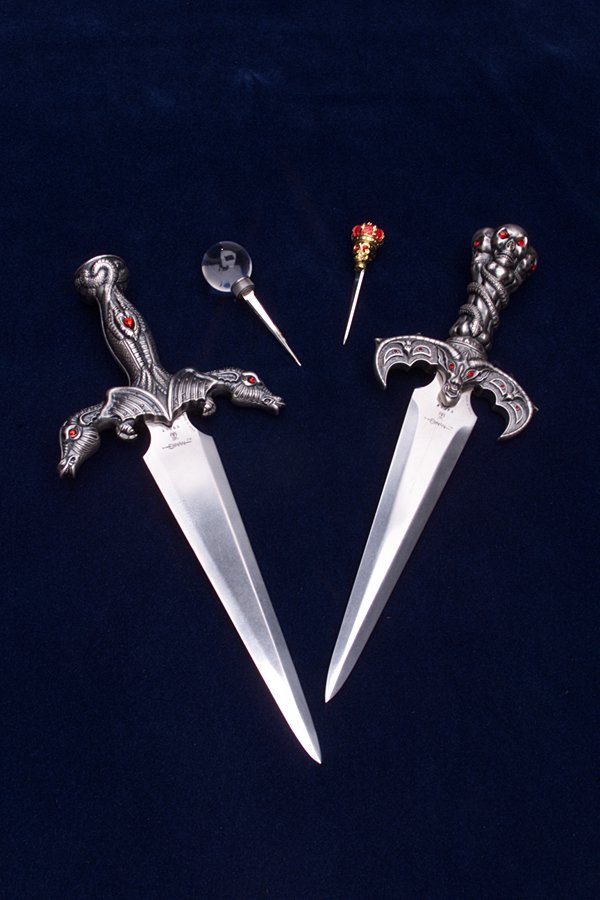
Do some objects like ornamental knives, daggers, etc. actually create negative energy between a couple when presented with such things? I gifted my husband with a dagger 1 ½ yrs ago and we have been fighting all the time. So much so that we are actually separating now. Do u think the dagger had something to do with it or we are just not right for each other? The dagger is kept in our bedroom on a desk close to our bed.This woman has, in our opinion, committed the unforgivable sin — not of giving a knife as a gift to a loved one, but rather, using "gifted" as a verb.
PEOPLE! STOP DOING THIS! WE BEG YOU!"Gave" works perfectly well as the past tense of give. It even takes fewer keystrokes to "give" than to "gift with," something we know our writer is concerned with. She did, after all, type "u" instead of "you."
We suspect if this woman took care with her language, her husband would be much less prone to "gifting" her with a good stabbing in the kisser.
Life in the Ungrammatical Lane
SPOGG scout Paul R. sends this from Florida:
"Closure" is what happens when the highway is shut down. It can also occur after one throws a pie in the face of a cheating boyfriend (provided this is not done in one's own apartment; cleaning up the mess afterward would only reopen the wounds).
A "closer" is someone who closes or ends something — the last pitcher in a baseball game, or perhaps a final act in a nightclub show.
Maybe the Florida Department of Transportation really did mean to use "closer," though.
Our hopes are high that they're hiring entertainers to cheer the spirits of commuters stuck in Disneyworld traffic. "Buckle up! It's a small, crowded highway, after all! You're beautiful! We'll be here all week — try the veal!"
If anyone is driving on I-75 between Orlando and Tampa, he or she will be well warned by the flashing, DOT sign of "Nightly Lane Closers" starting 05-27-06.
"Closure" is what happens when the highway is shut down. It can also occur after one throws a pie in the face of a cheating boyfriend (provided this is not done in one's own apartment; cleaning up the mess afterward would only reopen the wounds).A "closer" is someone who closes or ends something — the last pitcher in a baseball game, or perhaps a final act in a nightclub show.
Maybe the Florida Department of Transportation really did mean to use "closer," though.
Our hopes are high that they're hiring entertainers to cheer the spirits of commuters stuck in Disneyworld traffic. "Buckle up! It's a small, crowded highway, after all! You're beautiful! We'll be here all week — try the veal!"
Saturday, May 27, 2006
More Fun with Hyphens
From an interesting Slate piece on mental illness and college kids:
There's no need to hyphenate mentally ill. Mentally is an adverb that modifies ill. Use hyphens when stringing together mutiple adjectives that modify a noun, because they make a sentence's meaning more clear.
For example: The high-intensity university life can be hard on students who are mentally ill.
One more note: It should be "There is a growing number," not "There are...." Number is the subject, and verbs must match the subject. Single subject, single verb conjugation, and so on.
The writer was confused here no doubt because of the prepositional phrase "of mentally ill students." When determining whether you need a singular or plural verb, look to the subject. You can ignore the prepositional phrase completely.
There are a growing number of mentally-ill students on campuses today, thanks in part to the success of psychotropic drugs, which allow more troubled students to get to college and to do well there.
There's no need to hyphenate mentally ill. Mentally is an adverb that modifies ill. Use hyphens when stringing together mutiple adjectives that modify a noun, because they make a sentence's meaning more clear.For example: The high-intensity university life can be hard on students who are mentally ill.
One more note: It should be "There is a growing number," not "There are...." Number is the subject, and verbs must match the subject. Single subject, single verb conjugation, and so on.
The writer was confused here no doubt because of the prepositional phrase "of mentally ill students." When determining whether you need a singular or plural verb, look to the subject. You can ignore the prepositional phrase completely.
Friday, May 26, 2006
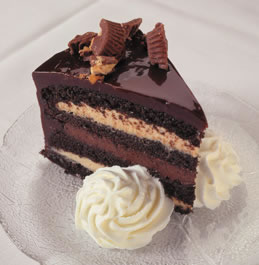
Let Them Eat Cake
Dear SPOGG:
A teacher whom I work with recently gave a grammar worksheet to her class. In correcting the students' work, I realized that I wasn’t sure about one of the items.
The item in question read: A good girl like (I, me, my) deserves some cake.
The students were to circle the word within the parenthesis that completed the sentence correctly. Initially, I thought that inserting “me” was correct. However, after separating the sentence, which is what I was taught to do when dealing with “me vs. I” personal pronoun debates, the sentence read to my dismay: “Me deserves some cake.” I am battling with myself, please help!
Dear Cake Eater:
To answer this, I will quote from The Elements of Style by Strunk and White.
P.S. SPOGG believes it should be a girl "such as" me, and not like. We confess we are having a hard time wrapping our heads around the rule. But we promise, when we totally get it, we will hold forth.
A teacher whom I work with recently gave a grammar worksheet to her class. In correcting the students' work, I realized that I wasn’t sure about one of the items.
The item in question read: A good girl like (I, me, my) deserves some cake.
The students were to circle the word within the parenthesis that completed the sentence correctly. Initially, I thought that inserting “me” was correct. However, after separating the sentence, which is what I was taught to do when dealing with “me vs. I” personal pronoun debates, the sentence read to my dismay: “Me deserves some cake.” I am battling with myself, please help!
Dear Cake Eater:
To answer this, I will quote from The Elements of Style by Strunk and White.
"And would you write 'The worst tennis player around here is I' or 'The worst tennis player around here is me'? The first is good grammar, the second is good judgment — although the me might not do in all contexts.In other words, use your ears. And then go have some cake.
P.S. SPOGG believes it should be a girl "such as" me, and not like. We confess we are having a hard time wrapping our heads around the rule. But we promise, when we totally get it, we will hold forth.
An Environmental Apostrophe
SPOGG awards Judy M. of Texas with its first-ever "Clear Grammar Initiative Award" for catching this apostrophe catastrophe:
This week an All-Employee Memo was sent from our EPA Headquarters in Washington, DC, to all employees nationwide. I am a big fan of the correct usage of "its" vs. "it's," so I was particularly disappointed in the Subject line, "Important Information about Employee Express And It's Replacement, myPay." (Note: "myPay" is the name of a computer program.) This went out to approximately 17,000 people.
- Its is a possessive, like his or hers.
- It's is a contraction of it is or it has.
Thursday, May 25, 2006
Was vs. Were
Dear SPOGG,Can you help me with the change of "if I WERE you" to "if I WAS you"? Recently I have been seeing both was and were in ESL book when referring to I, but with 3rd person singular I'm only seeing was -- as in "if he WAS a woman ..." Was is always "was" or has there been a shift lately?
— Thanks, Amy
Dear Amy,
If we were you, we'd want to stick with the traditional grammar rules. Then, the worst someone could accuse us of being was stuffy.
You can really go hog-wild reading about the subjunctive mood, which is what you're describing in your question. Or you can take the cheater-pants way out. SPOGG likes cheater-pants. They're washable and don't require starch and an iron.
If you're talking about something that's most likely not true (if I were you, for example), use were. But if you're talking about something that could well be true (if your husband was the fine man he claimed to be), then you'd want to use was.
Subscribe to:
Posts (Atom)